

Planning a Bathroom Reno in Richmond Hill & Stumped on Pipe Placement & Measurements ? Lot’s of homeowners only think about tiles & fixtures until it hits em – the plumbing layout was all wrong , & by then it’s too late . A tiny mistake in your bathroom rough in plumbing diagram can lead to failed inspections , a pretty hefty bill to redo things & a whole bunch of delays .
This guide’s gonna walk you through the correct layout, standard measurements & local Richmond Hill requirements before the walls get closed up.
What Is a Bathroom Rough-In Plumbing Diagram?
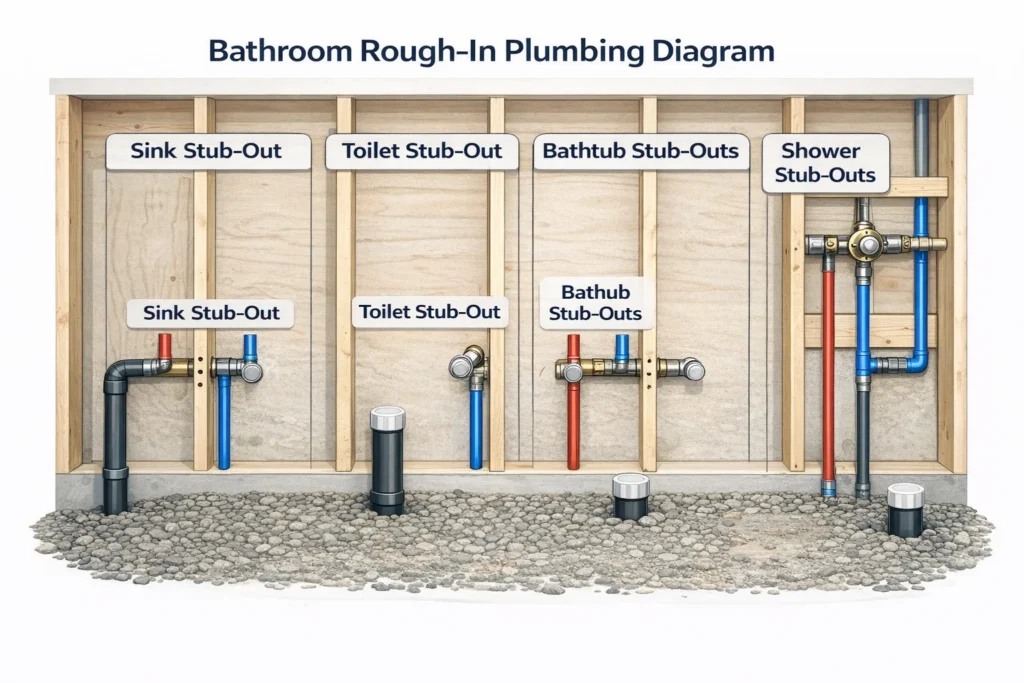
A bathroom rough in plumbing diagram is basically a blueprint of where your drain pipes , water supply lines , vent pipes & fixture connections are located before the walls & floors get finished . It’s the guide the plumbers use to get the job done right & make sure your bathroom passes inspection in Richmond Hill.
This diagram will include the toilet flange centre line , sink drain location , shower or tub drain placement , pipe sizes & vent connections . & if you’re lucky , a clear bathroom plumbing diagram for rough-in will show the required slope of drain pipes – usually ¼ inch per foot – so the wastewater flows smoothly.
What Is Included in a Rough Plumbing Diagram for Bathroom Renovations?
A standard rough plumbing diagram for bathroom projects will have:
- Where your toilet rough-in is in relation to the finished wall
- The height & water line spacing for the sink drain
- The shower or tub drain size & placement
- The vent stack connection
- The main drain line direction & slope
A standard 4 piece layout will get sorted out in the rough in plumbing diagram bathroom plan – just make sure the toilet , sink , bathtub & shower are spacier than they are connected to the drainage system.
Standard Bathroom Rough-In Plumbing Measurements
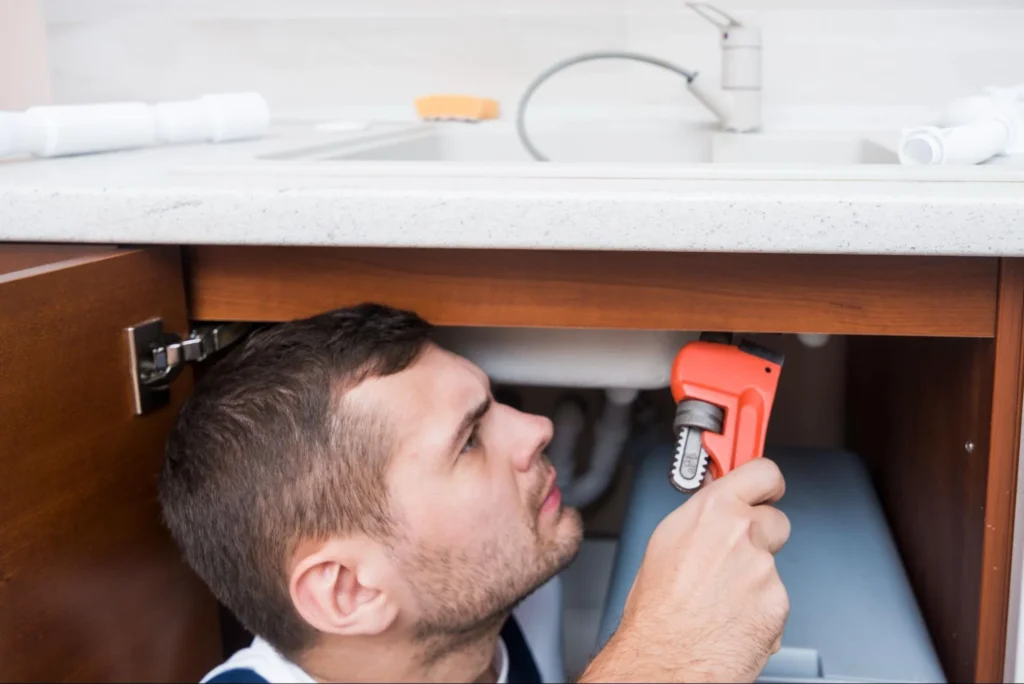
Correct measurements are the most important part of any bathroom rough in plumbing diagram. If the dimensions are even slightly off, fixtures may not fit, and your renovation may fail inspection in Richmond Hill. Below are the standard rough-in measurements commonly followed under Ontario plumbing guidelines.
Toilet Rough-In Measurements
The toilet is usually the first reference point in a rough plumbing diagram for bathroom layouts.
- Standard rough-in distance: 12 inches from the finished wall to the centre of the drain flange
- Side clearance: Minimum 15 inches from the centre of the toilet to each side wall or cabinet
- Front clearance: At least 24 inches in front of the toilet
Most modern homes in Richmond Hill use the 12-inch rough-in. Always measure from the finished wall, not the framing.
Sink Rough-In Plumbing Measurements
Sink placement must align with vanity size and drainage slope shown in the bathroom plumbing diagram for rough-in.
- Drain pipe height: 16 to 20 inches from the finished floor
- Hot and cold water lines: Around 21 inches from the floor
- Spacing between supply lines: About 4 inches apart
- Minimum side clearance: 4 inches from side wall
Proper height ensures the P-trap connects smoothly without sharp bends.
Bathtub Rough-In Dimensions
For a standard tub in a 4-piece layout:
- Drain pipe size: 1½ inches minimum
- Drain position: Based on manufacturer specs
- Faucet height: Typically 4 to 6 inches above the tub rim
Your rough in plumbing diagram for a standard 4 piece bathroom should match the exact tub model to avoid alignment issues.
Shower Rough-In Measurements
Showers have stricter drain requirements.
- Minimum drain size: 2 inches (Ontario requirement)
- Shower valve height: Around 48 inches from the finished floor
- Shower head height: About 72 to 80 inches
- Minimum shower size: 30 x 30 inches
Using a 2-inch drain is essential for proper water flow and inspection approval.
Drain Pipe Slope Requirement
All horizontal drain lines in a rough in bathroom plumbing diagram must slope:
- ¼ inch per foot toward the main drain
This slope prevents standing water and drainage problems.
Basement Bathroom Rough-In Plumbing Diagram
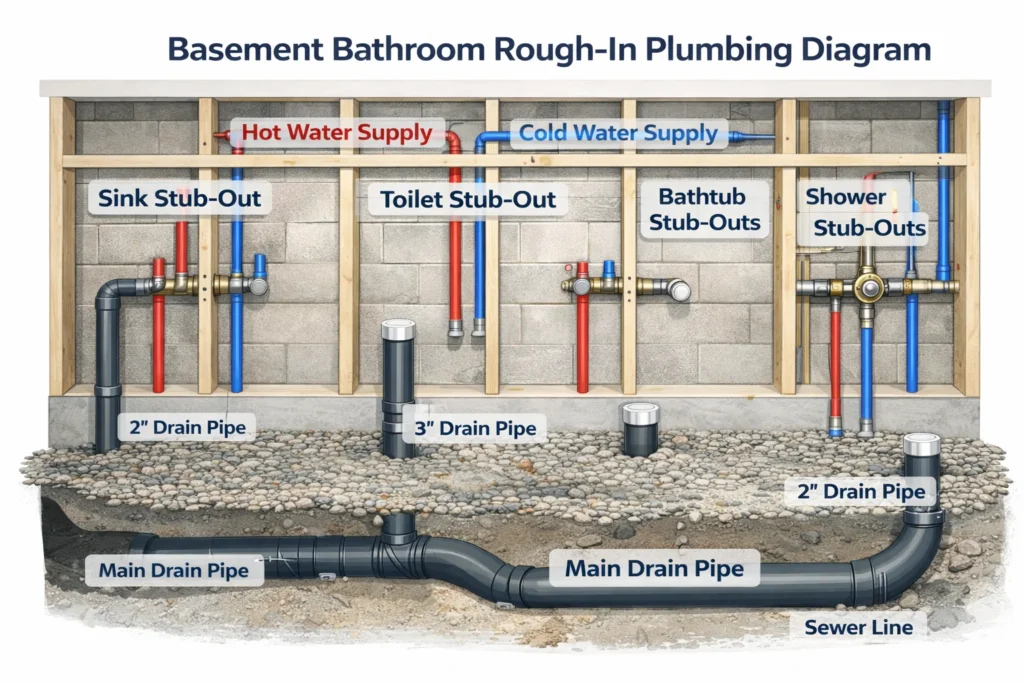
A basement bathroom rough in plumbing diagram is slightly different from a main-floor layout because the plumbing sits below ground level and connects to the home’s main sewer line under the concrete slab. In many Richmond Hill homes, especially newer builds, a basement rough-in is already installed by the builder. However, the pipe locations must still match your final bathroom layout.
A proper basement bathroom rough in plumbing diagram shows the toilet drain location, shower or tub drain, sink drain, vent connection, and the direction of the main sewer line. Since changes under concrete are costly, accurate measurements at this stage are critical.
What Is Included in a Basement Rough-In?
Most basement rough-ins include:
- A capped 3-inch or 4-inch toilet drain pipe
- A 2-inch shower drain pipe
- A 1½-inch or 2-inch sink drain
- A vent connection point
- Drain line slope toward the main stack
Your rough plumbing diagram for bathroom renovations should confirm these pipe sizes before framing begins.
Gravity Drain vs. Sewage Ejector Pump
In Richmond Hill homes, there are two common drainage setups:
1. Gravity Drain System
If the basement floor is higher than the city sewer line, waste flows naturally using proper pipe slope.
2. Sewage Ejector Pump System
If the basement is lower than the sewer line, a pump is required to move wastewater upward to the main drain.
Your rough in bathroom plumbing diagram must reflect the correct system. Installing fixtures without confirming this can lead to drainage failure.
Important Basement Rough-In Measurements
When reviewing a basement bathroom plumbing diagram for rough-in, check:
- Toilet rough-in distance: 12 inches from finished wall
- Minimum 15 inches from toilet centre to side wall
- Shower drain centred according to base size
- Drain pipe slope: ¼ inch per foot
Because basement plumbing is embedded in concrete, relocating pipes later can require cutting the slab, which increases cost and delays.
Richmond Hill Permit & Inspection Requirements for Bathroom Rough-In
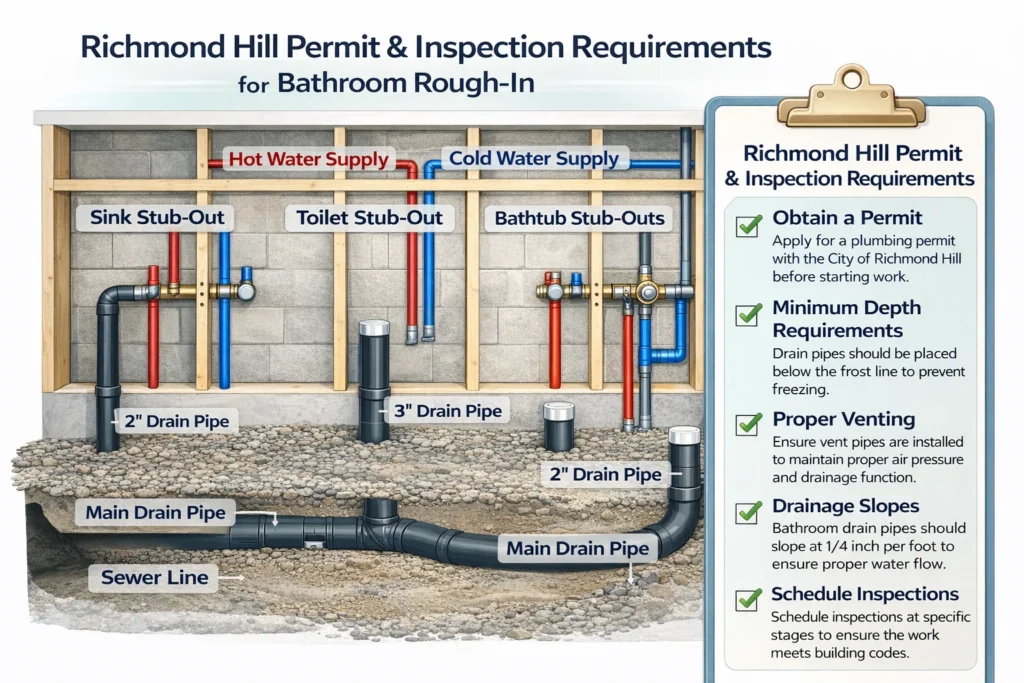
If you’re trying to get a new bathroom plumbed up according to a bathroom rough in plumbing blueprint, you will almost always need a permit from the city of Richmond Hill. You’re going to need a building permit for things like adding a new bathroom, finishing up a basement bathroom, or just moving around plumbing fixtures – like moving a toilet or a sink or a shower. Any time you’re making changes to drain lines, vent pipes or water supply lines, you’ll be needing to get approval before you even start the job.
Don’t even think about starting any plumbing work without a permit, because you can end up with a big fine, or failing an inspection, or having problems when you go to sell the place.
What Does the Rough-In Inspection Check?
After installing pipes according to your rough plumbing diagram for bathroom renovations, an inspection must be completed before insulation and drywall are installed. The inspector will check:
- Correct pipe sizes for toilet, sink, and shower
- Drain slope of ¼ inch per foot
- Proper venting connection
- Secure pipe support
- Leak-free water supply lines
- Accurate toilet rough-in measurement
If the bathroom plumbing diagram for rough-in does not meet Ontario code requirements, changes must be made before approval.
Why Permit Approval Is Important
An approved rough in bathroom plumbing diagram confirms that the drainage system works properly and meets safety standards. It also protects homeowners from future plumbing failures and legal issues. In Richmond Hill renovations, passing the rough-in inspection is required before moving to the next stage of construction.
Step-by-Step Bathroom Rough-In Plumbing Process
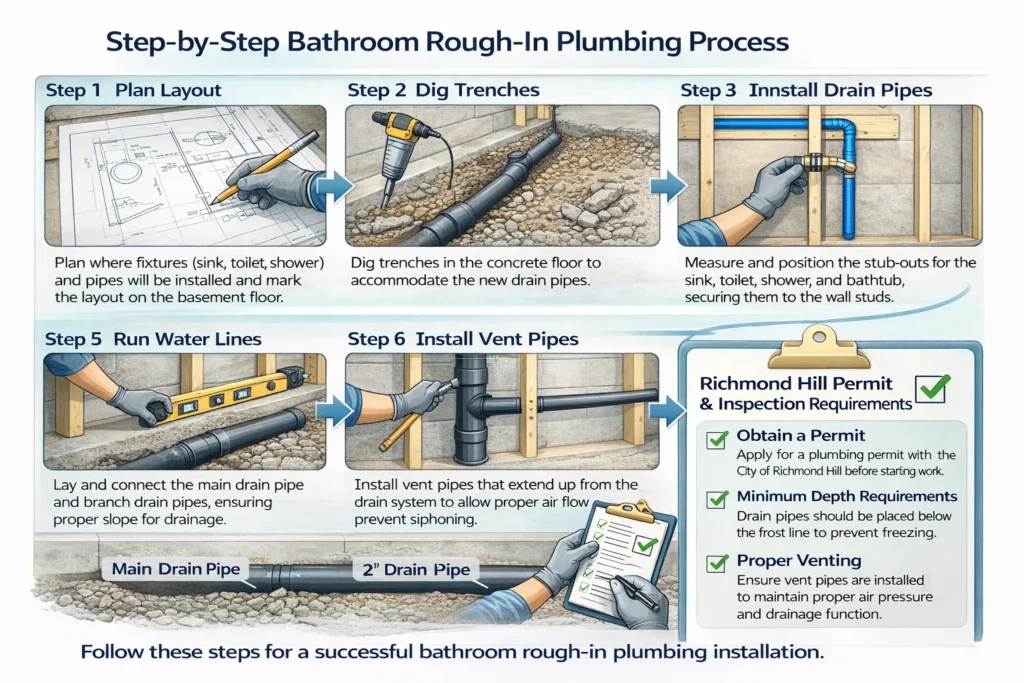
You’re going to need to follow a proper bathroom rough in plumbing diagram very closely to get things right – and that means following each step with care, so you can get that all-important inspection approval. The following process is pretty much the standard for most Richmond Hill renovations, and it’s what you’ll need to do.
1. Plan Out Your Bathroom Layout
First things first, you’ve got to figure out where all the fixtures are going – toilet, sink, shower, bathtub – and then mark out the centre lines on the floor, based on your rough in plumbing diagram – assuming you’re doing a standard 4 piece bathroom or a basement layout. Go over all your measurements before you even think about cutting or drilling.
2. Get Your Toilet, Sink, and Shower Positions Just Right
Get out your measuring tape and figure out where the toilet is going, usually 12 inches from the finished wall. Mark down where the sink drain needs to be, and the shower drain’s centre point. And remember, all these measurements need to match up with the bathroom plumbing diagram – otherwise you’re going to end up with fixtures that just aren’t aligned properly.
3. Install Drain Pipes
Install the main drain line first, then connect branch drains for each fixture. Maintain a slope of ¼ inch per foot toward the main sewer line. Use the correct pipe sizes:
- 3 or 4 inches for toilet
- 2 inches for shower
- 1½ or 2 inches for sink
Proper slope and sizing are critical parts of any rough plumbing diagram for bathroom installations.
4. Install Vent Pipes
Connect vent pipes to allow airflow and prevent suction in the drain system. Venting must meet Ontario plumbing requirements. Incorrect vent placement can cause slow drainage and inspection failure.
5. Run Water Supply Lines
Install hot and cold water lines to the sink, toilet, and shower valve. Secure pipes properly and position them at the correct height shown in your rough in bathroom plumbing diagram.
6. Pressure Test the System
Before inspection, test water supply lines for leaks and confirm that drain connections are secure. Any leaks must be fixed before approval.
7. Schedule Rough-In Inspection
Once everything matches the bathroom rough plumbing diagram and Ontario standards, schedule the plumbing inspection. Approval is required before insulation and drywall installation.
Cost of Bathroom Rough-In Plumbing in Richmond Hill (2026 Estimate)
The cost of installing plumbing based on a bathroom rough in plumbing diagram depends on whether you are adding a new bathroom, finishing a basement, or relocating existing fixtures. In Richmond Hill, labour rates and permit requirements also affect the final price.
Below are general 2026 estimates for rough-in plumbing only, not including fixtures, tiles, or finishing work.
Average Rough-In Plumbing Cost
- New 4-piece bathroom rough-in: $2,500 to $5,000
- Basement bathroom rough-in (existing pipes): $2,000 to $4,000
- Basement bathroom with concrete cutting: $3,500 to $7,000
- Relocating toilet or main drain line: $1,000 to $3,000 extra
These costs include installing drain pipes, venting, and water supply lines according to a rough plumbing diagram for bathroom layouts.
What Affects the Cost?
Several factors influence the total price:
1. Pipe Relocation
Moving a toilet or shower from its original location requires modifying the drain system shown in your bathroom plumbing diagram for rough-in.
2. Concrete Slab Cutting
Basement projects often require cutting and re-pouring concrete to adjust drain placement.
3. Venting Modifications
Adding new vent connections or extending existing stacks increases labour.
4. Permit and Inspection Fees
Richmond Hill building permits and inspections add to overall project costs.
5. Ejector Pump Installation
If a sewage ejector pump is required, this can add $1,500 to $3,000 to the total cost.
How to Control Rough-In Costs
To avoid unexpected expenses:
- Finalize the bathroom layout before plumbing begins
- Follow an accurate rough in bathroom plumbing diagram
- Avoid moving major fixtures after installation
- Confirm drainage system type in basement projects
A properly planned bathroom rough plumbing diagram reduces rework, inspection delays, and unnecessary labour costs.
DIY vs Hiring a Licensed Bathroom Renovation Contractor in Richmond Hill

Working from a bathroom rough in plumbing diagram requires accurate measurements, correct pipe sizing, proper venting, and compliance with Ontario plumbing code. If the rough-in stage is done incorrectly, it can lead to failed inspections, drainage issues, and expensive rework.
Here is a direct comparison to help you decide.
DIY Bathroom Rough-In Plumbing
DIY may seem cost-effective, but you must ensure:
- Toilet rough-in is exactly 12 inches from the finished wall
- Drain pipes slope ¼ inch per foot
- Shower drain is 2 inches minimum
- Venting is properly connected to the main stack
- Pipe sizes match code requirements
If your rough plumbing diagram for bathroom installation does not meet inspection standards, approval will not be granted. Corrections often require opening floors or walls again.
Hiring a Licensed Contractor in Richmond Hill
A licensed contractor ensures:
- The bathroom plumbing diagram for rough-in follows Ontario regulations
- Pipe sizes and venting are installed correctly
- Rough-in inspection passes without delays
- Basement rough-ins connect properly to the main drain
For new bathrooms, basement additions, or fixture relocation, hiring a professional affordable bathroom renovation in richmond hill reduces risk and protects your investment.
Ready to Start Your Bathroom Renovation the Right Way?
Every renovation starts with some tough decisions that ultimately shape the final result. An accurate bathroom rough in plumbing diagram is way more than just a dull technical drawing – it’s the foundation that everything else is built upon. The right design makes sure you get proper drainage, smooth sailing with inspections, and fixtures that go in exactly where they need to.

At BathGuys, careful planning comes first and foremost. From taking precise measurements to drawing up code-compliant rough plumbing diagrams for bathroom installs, we handle every step with precision – and local expertise which is a must in Richmond Hill and the GTA. Clear layouts, right pipe sizing, and work done with an eye to getting inspections done right helps prevent costly delays and future plumbing headaches down the line.
Whether you’re finishing a basement bathroom, building a standard 4-piece layout, or just moving fixtures around, having a pro on hand makes the whole process a lot simpler and a lot less stressful.
Take the next step with confidence. Book a free consultation with BathGuys today and start your renovation off on the right foot.
FAQs About Bathroom Rough-In Plumbing Diagrams
-
What is the standard toilet rough-in size in Ontario?
The standard toilet rough-in size in Ontario is 12 inches from the finished wall to the centre of the drain pipe – and that’s clearly marked in a proper bathroom rough in plumbing diagram. Most modern homes around Richmond Hill follow the 12 inch standard, but always make sure you’re measuring from the finished wall surface, not from the framing.
-
What size drain pipe do I need for a shower rough in?
In Ontario, plumbing standards say you need a minimum 2-inch drain pipe for showers – that ensures proper water flow and reduces the chances of a clog forming. Any bathroom rough plumbing diagram for renovations has to show a 2-inch shower drain to pass an inspection.
-
How much slope do bathroom drain pipes need?
Your bathroom drain pipes need to slope ¼ inch per foot toward the main sewer line – that way, wastewater flows properly and doesn’t just sit in the pipe. Getting the slope right is an important detail to get right in any bathroom plumbing diagram for rough-in – and it gets checked during inspection.
-
What do I see in a typical basement bathroom rough in plumbing diagram?
A typical basement bathroom rough in plumbing diagram will usually include a 3 or 4 inch toilet drain, a 2 inch shower drain, a sink drain, some vent connections, and the direction of the main sewer line. In some homes, it might also show a sewage ejector pump system if gravity drainage isn’t an option.
-
Can I do a bathroom rough in plumbing myself in Ontario?
You can do plumbing work on your own property if you’re a homeowner, but it’s gotta meet Ontario code and pass an inspection. If your bathroom rough plumbing diagram is off, or your pipe sizing doesn’t meet standards, you’ll have to make some changes before the permit gets approved.